
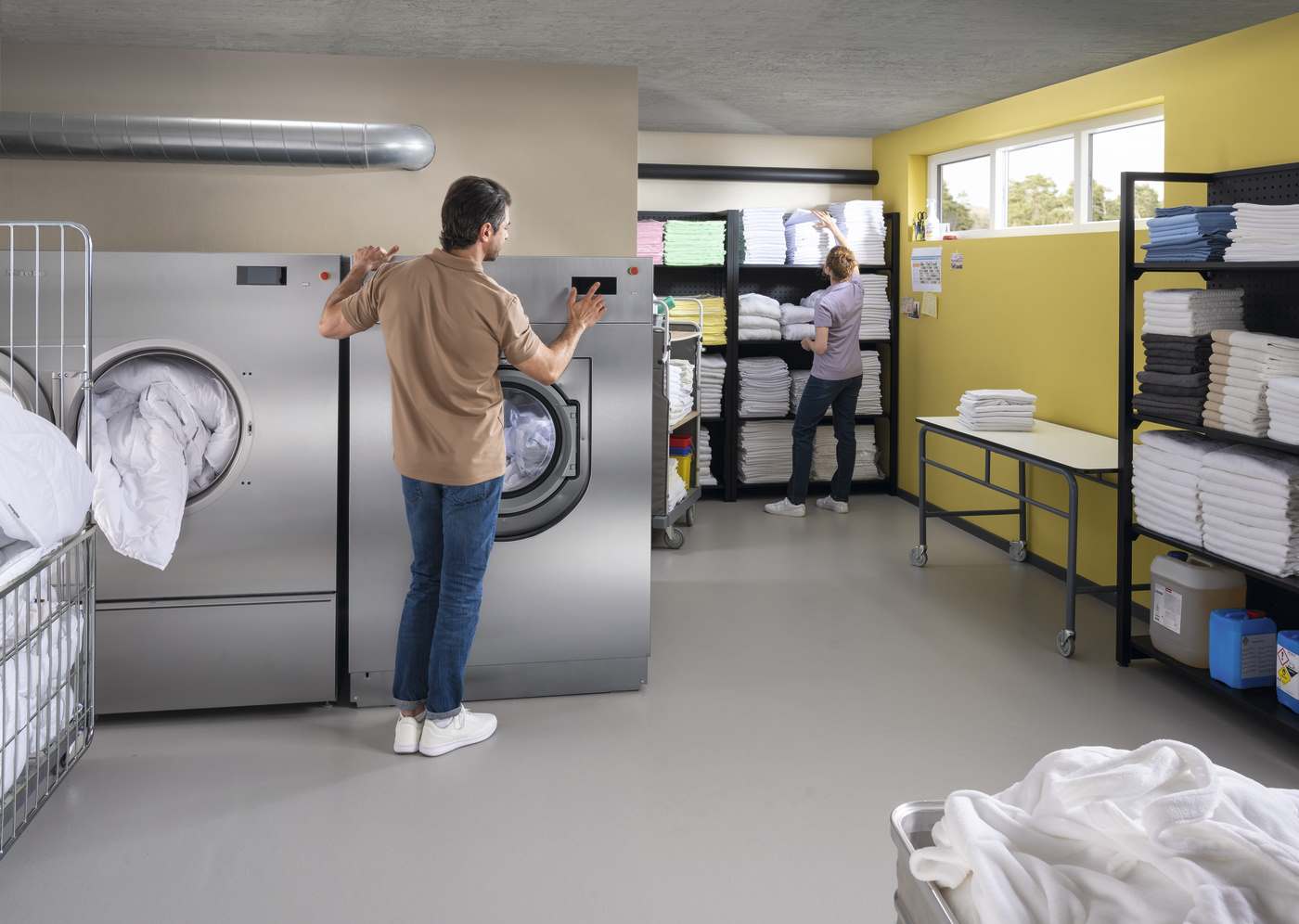
Commercial laundry equipment works hard. In care homes, hotels, housing associations and other on-premise laundries, machines may run several times a day, handling different loads and programmes under the control of multiple operators.
Some wear and tear is inevitable, but equipment rarely goes from working perfectly to breaking down without warning, especially when it has been properly maintained. Smaller changes in performance will often appear first.
A cycle taking longer than usual, laundry emerging too wet or staff quietly developing workarounds can all indicate that something needs attention. Individually, these changes may appear minor. When they become a pattern, they should not be ignored.
Cycles are taking longer
Commercial laundries depend on predictable turnaround times. When washing or drying cycles regularly overrun, the effects can quickly spread through the working day.
The cause may be straightforward, such as filters requiring attention, incorrect loading or an unsuitable programme. It could also indicate that the equipment is no longer operating as efficiently as it should.
A few additional minutes may not seem important, but repeated across several daily loads, they can reduce throughput and increase energy consumption. They can also cause laundry to queue at the next stage of the process.
Laundry is coming out too wet
Laundry that is consistently wetter at the end of a cycle places additional pressure on the tumble dryer.
Longer drying times increase energy use and reduce the number of loads that can be processed. What initially appears to be a dryer problem may therefore originate with the washing machine.
This is why it is important to consider your commercial laundry equipment as a complete system and examining each machine separately can make the underlying cause more difficult to identify.
Dryers are struggling to keep pace
If drying times are increasing, results are inconsistent or items regularly need additional time in the drum, simply extending the programme may not be the best answer.
The problem could relate to airflow, loading, routine cleaning or the amount of moisture left in the laundry after washing. It may also mean that the available drying capacity is no longer sufficient for the volume being processed.
Adding extra drying time might provide a temporary solution, but it can conceal a developing problem while increasing operating costs.
Results are becoming inconsistent
Not every commercial laundry problem is caused by a mechanical fault.
Different members of staff may select different programmes, load machines inconsistently or use varying quantities of detergent. Changes in the types of textiles being processed can also affect the final result.
Clear procedures, suitable programmes, staff training and automatic detergent dosing can all improve consistency. Repeatable results protect textiles, support hygiene standards and help make better use of staff time.
Staff have developed workarounds
Staff often notice changing machine performance before anyone else. They may begin reducing load sizes, running items through a second cycle, avoiding a particular machine or allowing extra time for a programme to finish.
These adjustments can gradually become accepted practice. However, they may also waste water and energy, reduce capacity and place additional pressure on employees.
Regularly speaking to those who operate the equipment can help uncover issues that might not be immediately obvious during a visual inspection.
When to take a closer look
Unusual noises, excessive vibration, repeated minor faults, inconsistent dosing and changing cycle times do not necessarily mean that equipment must be replaced. They do, however, justify further investigation.
Depending on the cause, the answer may be maintenance, repair, staff training, programme adjustment or a broader review of capacity and workflow. Addressing the issue early could prevent a relatively minor problem from becoming a serious interruption.
At Liver Laundry, we assess the complete commercial laundry operation rather than examining one machine in isolation. From washers, tumble dryers and ironers to dosing, servicing and workflow, we can identify developing problems and help every stage of the process work effectively.
For more information, call us today on 0151 263 7451.